

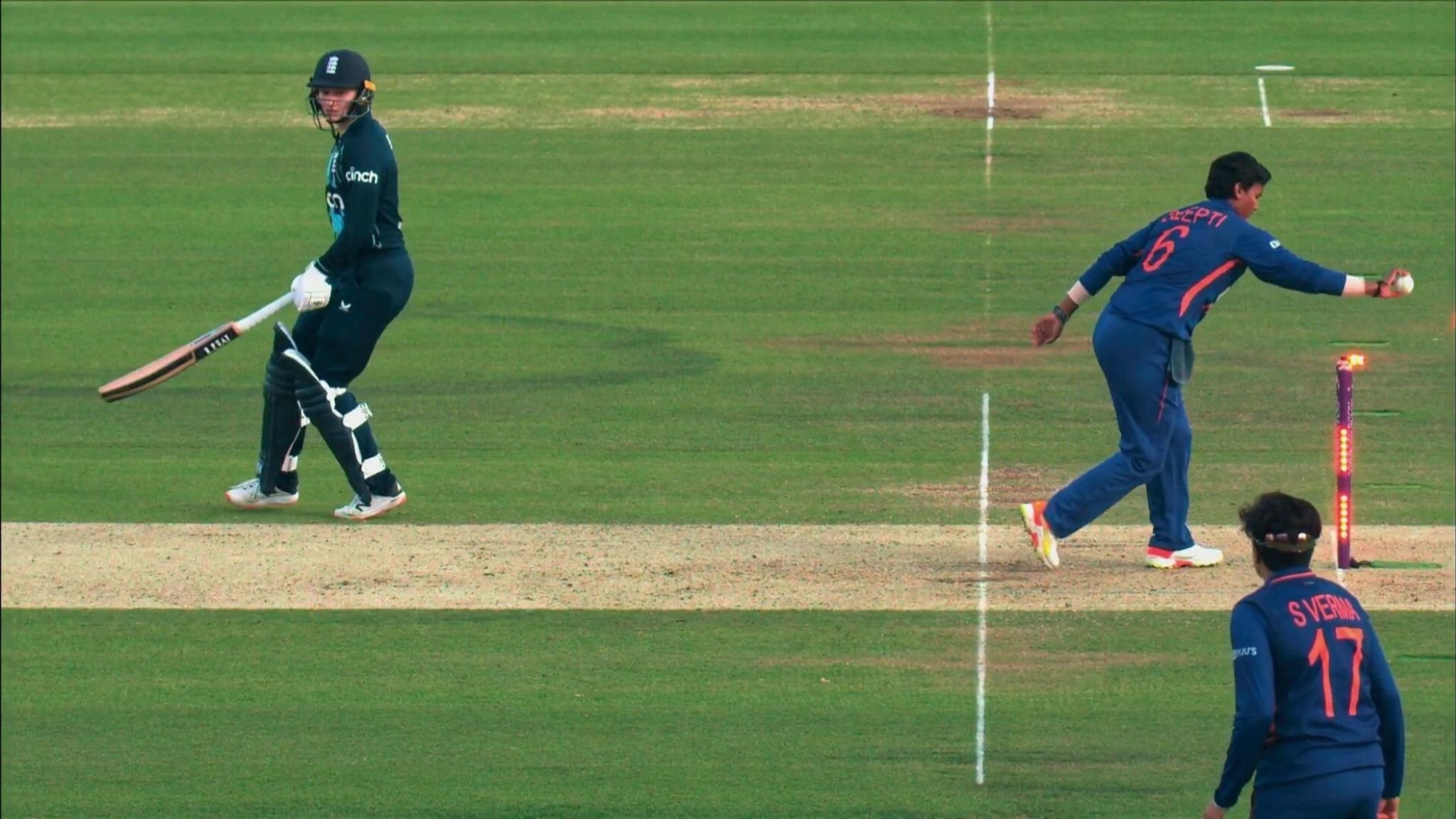
The Mankad rule in cricket allows a bowler to run out the batter at the non striker’s end if they leave their ground too early before the bowler reaches the point of expected release. The dismissal often attracts debate because some fans consider it against the spirit of cricket, while others argue that batters should not gain an unfair advantage by leaving the crease early.
The dismissal is named after former Indian cricketer Vinoo Mankad, who ran out Australian batter Bill Brown during India’s tour of Australia in 1947 and 1948. Today, the official Laws of Cricket classify this dismissal as a run out under Law 38.3. The method has featured in famous incidents involving Ravichandran Ashwin, Jos Buttler, Kapil Dev, Deepti Sharma, Fazalhaq Farooqi and Digvesh Rathi.
What Is the Mankad Rule in Cricket?
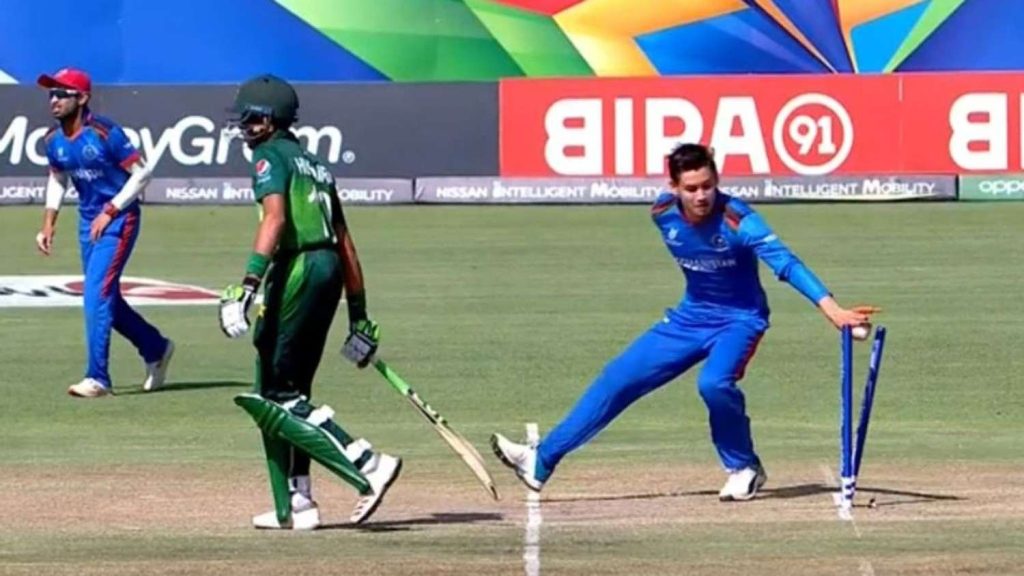
Source: mykhel
The Mankad rule applies when the non striker leaves their ground before the bowler reaches the point at which they would normally release the ball. If the bowler breaks the wicket at the non striker’s end while the batter is outside their ground, the batter can be given out run out, provided all requirements of the law are met.
The non striker is the batter standing at the opposite end from the player facing the delivery. They may begin moving forward before the ball is released so they can complete a run more quickly if their partner hits the ball.
However, leaving the crease too early can give the non striker an unfair advantage. Law 38.3 prevents this by allowing the bowler to attempt the run out before reaching the defined release point.
Under the current Laws of Cricket, this is a legitimate form of run out. It is not classified as an unfair play dismissal simply because the bowler uses this method.
What Is the Official Mankad Law in Cricket?
The dismissal is covered by Law 38.3, Non striker leaving their ground early, within the Laws of Cricket.
The law allows the bowler to run out the non striker from the moment the ball comes into play until the instant when the bowler would normally be expected to release it. The law defines this release point as the moment the bowler’s arm reaches the highest point of their normal bowling action in the delivery swing.
The important rules are:
- The non striker must be outside their ground when the wicket is broken.
- The bowler must attempt the dismissal before reaching the point at which the ball would normally be released.
- The bowler can break the wicket by throwing the ball at the stumps or by using the hand holding the ball, subject to the wicket breaking requirements.
- The fielding side must appeal for the dismissal.
- The umpire decides whether the requirements of the law have been met.
- If the ball is not delivered and the batter is not given out, the umpire calls and signals dead ball. The delivery does not count as a legal ball in the over.
A warning is not compulsory under the current law. A bowler may warn a batter as a matter of sportsmanship, but the rules do not require a warning before the dismissal.
Why Is It Called Mankading?
The term Mankading comes from Vinoo Mankad, the former Indian all rounder who became associated with this dismissal during India’s 1947 and 1948 tour of Australia.
During a match against an Australian XI in Brisbane in 1947, Mankad ran out Australian batter Bill Brown after Brown repeatedly left his crease early. Historical accounts report that Mankad warned Brown before completing the dismissal. Mankad later ran Brown out again during the second Test at Sydney.
Some Australian media coverage criticised Mankad’s actions. However, prominent Australian cricketers, including Don Bradman, defended the dismissal as being within the rules of cricket.
The term became widely used after these incidents. However, the method existed before Mankad. Historical records identify George Baigent of Sussex as an early first class batter dismissed this way in 1835 by Thomas Barker at the Forest Ground in Nottingham. Mankad gave the dismissal its familiar name, not its origin.
The terminology used by cricket’s governing bodies has also moved on. The MCC and ICC refer to it through the official description, run out at the non striker’s end, rather than treating Mankading as the formal name of the dismissal.
How Has the Mankad Rule Changed?
The biggest change came in 2022, when the MCC moved the dismissal from the unfair play section of the Laws of Cricket to the run out section.
| Period | Rule Position | What It Meant |
| Before October 2022 | Law 41.16, Unfair Play | The dismissal was covered under the unfair play provisions. |
| From 1 October 2022 | Law 38, Run Out | The dismissal became part of the ordinary run out law. |
| January 2023 clarification | Law 38.3 wording clarified | The timing of the bowler’s opportunity to run out the non striker was explained more clearly. |
| 1 October 2026 | MCC 2017 Code, Fourth Edition | The new edition took effect. The timing rule in Law 38.3 remains based on the bowler’s expected release point, while a separate clarification addresses control of the ball when a fielder breaks the wicket with the hand or arm holding it. |
The 2022 change took effect on 1 October. It recognised that a non striker leaving the ground early is a matter of run out rather than an inherently unfair action by the bowler.
In January 2023, the MCC clarified the wording of Law 38.3 after an attempted dismissal involving Adam Zampa and Tom Rogers in the Big Bash League. The clarification confirmed that once the bowler reaches the point at which they would normally release the ball, they can no longer run out the non striker under this specific law.
The MCC’s Fourth Edition of the 2017 Code came into effect on 1 October 2026. Law 38.3’s timing principle remains separate from the new clarification concerning how a wicket is fairly broken when a fielder uses the hand or arm holding the ball. The update should not be described as a new timing rule for Mankading.
Famous Mankading Incidents in Cricket History
Several non striker run out incidents have attracted international attention. Some became famous because of the players involved, while others helped clarify how the law works in practice.
| Year | Bowler or Player | Batter or Opponent | Match or Tournament |
| 1835 | Thomas Barker | George Baigent | Sussex vs Nottinghamshire, first class match |
| 1947 and 1948 | Vinoo Mankad | Bill Brown | India tour of Australia |
| 1968 and 1969 | Charlie Griffith | Ian Redpath | Australia vs West Indies Test |
| 1974 and 1975 | Greg Chappell | Brian Luckhurst | Australia vs England ODI |
| 1977 and 1978 | Ewen Chatfield | Derek Randall | New Zealand vs England Test |
| 1978 and 1979 | Alan Hurst | Sikander Bakht | Australia vs Pakistan Test |
| 1992 | Kapil Dev | Peter Kirsten | India vs South Africa ODI |
| 2014 | Sachithra Senanayake | Jos Buttler | England vs Sri Lanka ODI |
| 2019 | Ravichandran Ashwin | Jos Buttler | IPL match |
| 2022 | Deepti Sharma | Charlie Dean | India vs England women’s ODI |
| 2023 | Fazalhaq Farooqi | Shadab Khan | Pakistan vs Afghanistan ODI |
| 2024 | Mohan Prasath | Ravichandran Ashwin | Tamil Nadu Premier League warning incident |
| 2025 | Digvesh Rathi | Jitesh Sharma | Lucknow Super Giants vs Royal Challengers Bengaluru, IPL |
1. Vinoo Mankad and Bill Brown, 1947 and 1948
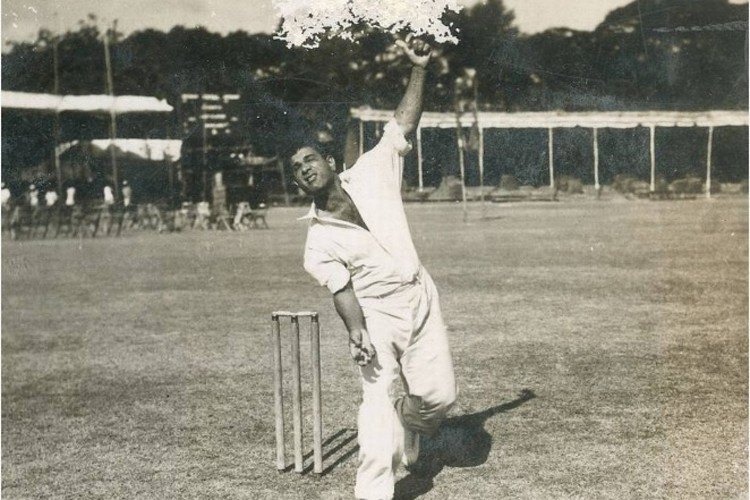
Source: India TV News
The incident involving Vinoo Mankad and Bill Brown established the name Mankading in cricket. During India’s tour of Australia, Mankad ran Brown out at the non striker’s end after Brown repeatedly left his crease early. Accounts of their first incident record that Mankad warned Brown before completing the dismissal.
The incident became a talking point in the Australian press. Don Bradman defended Mankad’s actions, arguing that the Laws allowed the dismissal. The episode continues to shape discussions about warnings, fairness and backing up at the non striker’s end.
2. Kapil Dev and Peter Kirsten, 1992
During India’s tour of South Africa in 1992, Kapil Dev ran out Peter Kirsten at the non striker’s end in an ODI in Port Elizabeth. Kirsten had been leaving his crease early, and Kapil had warned him before completing the dismissal.
The incident became one of the most remembered examples of the rule in international cricket. It also showed that the debate over warnings and sportsmanship had continued decades after the original Mankad incident.
3. Sachithra Senanayake and Jos Buttler, 2014
Sri Lankan bowler Sachithra Senanayake ran out England’s Jos Buttler during an ODI at Edgbaston in Birmingham in June 2014. Buttler had left his ground at the non striker’s end before the delivery was released.
The dismissal caused debate about whether the bowler should have completed the appeal. The incident became particularly notable because Buttler would be involved in another famous non striker run out controversy in 2019.
4. Ravichandran Ashwin and Jos Buttler, 2019 IPL
One of the most famous modern Mankading incidents occurred during the 2019 Indian Premier League match between Kings XI Punjab and Rajasthan Royals. Ravichandran Ashwin ran out Jos Buttler at the non striker’s end after noticing that Buttler had left his ground early.
The dismissal attracted widespread attention and divided cricket fans, players and commentators. Some criticised Ashwin for not giving a warning, while others argued that the batter was responsible for remaining inside the crease. The incident brought the rule back into mainstream cricket discussions.
5. Deepti Sharma and Charlie Dean, 2022
India’s Deepti Sharma ran out England’s Charlie Dean at Lord’s in September 2022 during the final women’s ODI of the series. Dean was backing up at the non striker’s end when Sharma broke the wicket before releasing the ball.
The dismissal secured India’s victory and completed a 3 to 0 series win. It triggered a major international debate, with opinions divided over the method even though it was permitted under the Laws. The incident took place shortly before the revised classification of the dismissal took effect on 1 October 2022.
6. Fazalhaq Farooqi and Shadab Khan, 2023
Afghanistan bowler Fazalhaq Farooqi ran out Pakistan’s Shadab Khan at the non striker’s end during the second ODI in Hambantota on 24 August 2023. Shadab was dismissed for 48 off 35 balls on the first ball of the final over, with Pakistan needing 11 runs to win.
Pakistan still won by one wicket after Naseem Shah struck crucial boundaries. Shadab was named Player of the Match. The incident showed that a non striker run out can decide a high pressure moment without determining the match result.
7. Ravichandran Ashwin and Adil Rashid, 2023 IPL
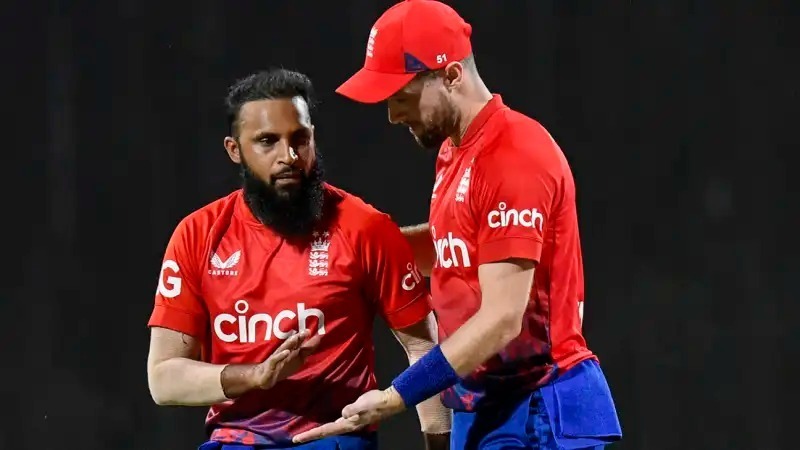
Source: ICC
During the 2023 IPL match between Rajasthan Royals and Sunrisers Hyderabad, Ashwin stopped during his run up after believing that Adil Rashid had left his ground early at the non striker’s end. Ashwin did not complete a dismissal and instead warned Rashid before restarting his over.
The incident is useful context for the warning debate because it shows that a bowler can choose to warn a batter without being legally required to do so. A warning remains a personal or sporting choice rather than a condition of Law 38.3.
8. Mohan Prasath and Ravichandran Ashwin, 2024 TNPL
In a Tamil Nadu Premier League match on 28 July 2024, Mohan Prasath stopped during his run up after noticing Ashwin backing up at the non striker’s end. Prasath warned Ashwin rather than attempting a dismissal. Ashwin later argued that the law and the batter’s position needed to be understood correctly.
The moment attracted attention because Ashwin had previously defended non striker run outs, including his dismissal of Jos Buttler in the IPL. It illustrated that the same rule applies regardless of a batter’s reputation or their views on the issue.
9. Digvesh Rathi and Jitesh Sharma, 2025 IPL
On 27 May 2025, Lucknow Super Giants spinner Digvesh Rathi attempted to run out Royal Challengers Bengaluru batter Jitesh Sharma at the non striker’s end during their IPL match in Lucknow. The incident occurred on the final ball of the 17th over. Sharma was outside his crease, but the third umpire ruled him not out because Rathi’s arm had already passed the highest point of his normal bowling action, the point at which he would normally release the ball.
This case is a direct illustration of the timing requirement in Law 38.3. The batter being outside the crease is not enough by itself: the bowler must attempt the dismissal before reaching the legally defined release point. Lucknow captain Rishabh Pant also appeared to withdraw the appeal, but the third umpire’s not out decision was based on the timing of Rathi’s action.
Is Mankading Against the Spirit of Cricket?
There is no single view shared by all players and fans. Some believe that a bowler should give a warning before attempting the dismissal, especially when the batter has not gained a significant advantage. Others argue that the non striker must follow the law and remain inside the crease until the ball is released.
The MCC World Cricket Committee has stated that there is no precedent requiring a bowler to warn a batter. Its position is that a bowler is within their rights to attempt the dismissal the first time the batter breaks the law. The committee has also argued that the batter is responsible for remaining in their ground rather than expecting a warning.
The written law does not require a warning. A bowler can attempt the dismissal when the conditions are met, and the umpire decides whether it is valid.
The most practical way to avoid controversy is for non strikers to stay within their ground until the bowler reaches the point of expected release. This removes the opportunity for the dismissal and prevents the batter from gaining an early start.
Does a Bowler Get Credit for a Mankad Wicket?
No. A non striker run out is recorded as a run out on the scorecard, not as a wicket credited to the bowler. The dismissal does not increase the bowler’s wicket tally.
This is an important distinction when reviewing a player’s bowling figures. The bowler may have directly effected the dismissal, but the scorecard records it as a run out rather than a bowler credited wicket.
Frequently Asked Questions
Yes. Mankading is a legal form of run out under Law 38.3 when the non striker leaves their ground too early and the bowler breaks the wicket within the permitted time.
No. A warning is not compulsory under the current Laws of Cricket. The MCC World Cricket Committee has confirmed that a bowler can attempt the dismissal the first time the batter breaks the law.
The method existed before Vinoo Mankad. Historical records identify George Baigent of Sussex as an early first class batter dismissed this way in 1835 by Thomas Barker. The modern term comes from Mankad’s incidents involving Bill Brown in 1947 and 1948.
No. Under Law 38.3, the bowler must attempt the dismissal before reaching the point at which they would normally release the ball. The law defines this as the moment the bowler’s arm reaches the highest point of their normal bowling action in the delivery swing.
Yes. The dismissal is recorded as a run out. Since 1 October 2022, it has been classified under the run out law rather than the unfair play section.
No. The dismissal is recorded as a run out, so the bowler does not receive a wicket in their bowling figures.
The MCC’s Fourth Edition of the 2017 Code took effect on 1 October 2026. The timing principle in Law 38.3 remains based on the bowler’s expected release point. The new edition also includes a separate clarification about control of the ball when a fielder breaks the wicket with the hand or arm holding it.
Conclusion
The Mankad rule in cricket allows a bowler to run out a non striker who leaves the crease too early, provided the dismissal is attempted before the legally defined release point. Named after Vinoo Mankad, the method has produced famous incidents involving Bill Brown, Kapil Dev, Jos Buttler, Ravichandran Ashwin, Deepti Sharma, Fazalhaq Farooqi and Digvesh Rathi.
The dismissal is now part of Law 38, and a warning is not compulsory. The 2025 Rathi incident showed why the timing requirement matters: even if a batter is outside the crease, the dismissal cannot stand if the bowler has already reached the point of expected release. The simplest way for batters to avoid this dismissal is to remain inside their ground until the ball has been released.